



Community Corner: Our Lady's Nursery Ballymun
Matthew Fegan
On the morning I visit, very young children are playing outside. Some notice a stranger walking through the gates and wave. Others are too busy with whatever game has temporarily consumed them. Inside, the building opens up room by room. Children play together in classrooms, surrounded by toys, books and the accumulated colour of early childhood. Walking through, some come over to show me what they are playing with. Others continue with the serious business of being small.
It would be easy, from those first few minutes, to understand Our Lady’s Nursery simply as a childcare service, it is anything but.
Around 112 children attend the nursery, the majority referred through Tusla and the HSE. Many of the families the organisation works with are navigating circumstances that extend far beyond the ordinary pressures of raising young children, including homelessness, addiction, poor mental health, domestic violence and trauma.
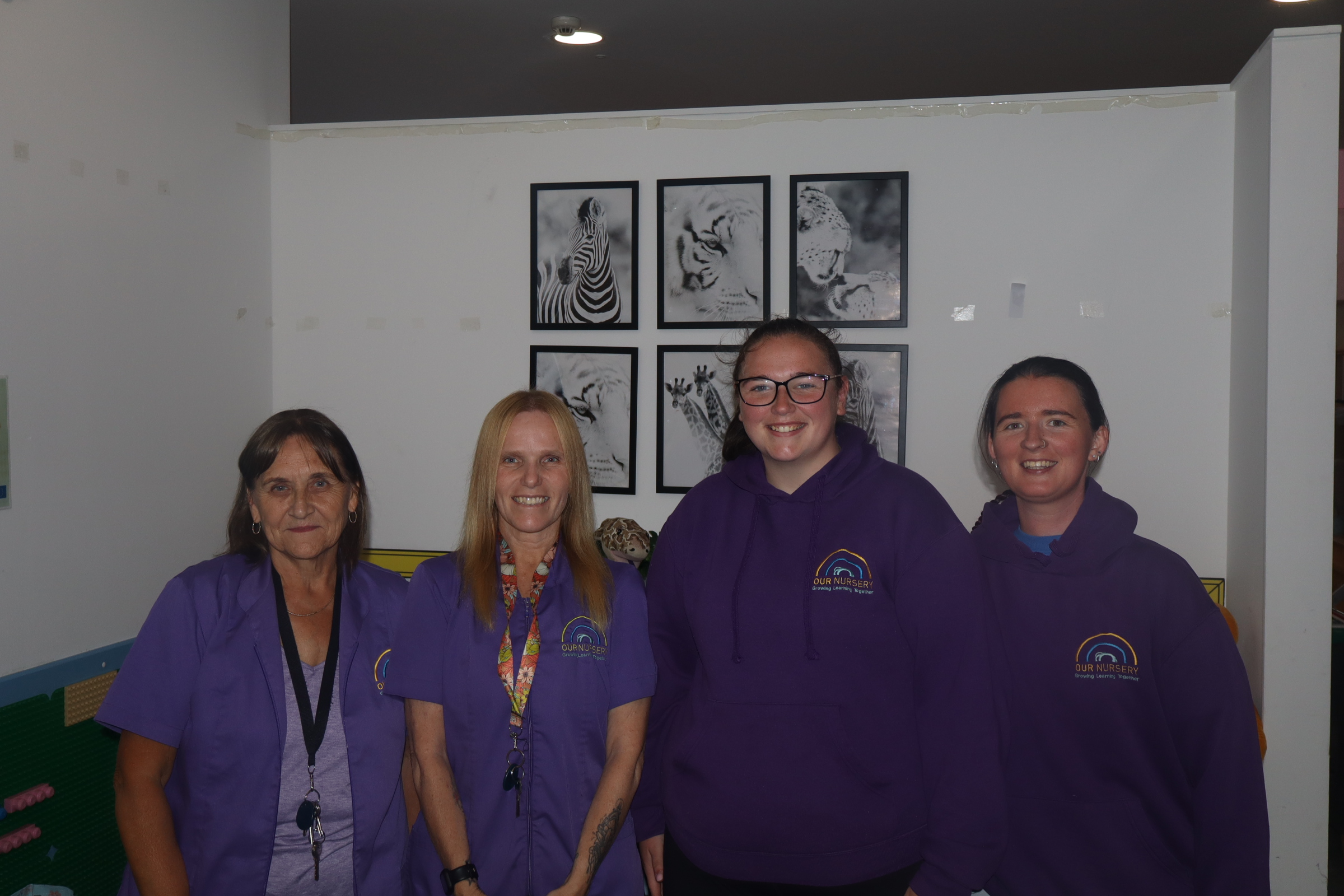
There are around 40 staff, with four staff members to a room of 16 children. Every child has a key worker, but, importantly, so does every family.
That means knowing when a child has missed a day and ringing home, noticing when something has changed. Most importantly, it means building enough trust that a parent might eventually say what is happening outside the nursery walls.
“We were a childcare service that just looked after the children,” Bernie Kelly, a staff member, explains. “And then because of the needs of the families, we realised that if we looked after the families a little bit, you could see that the children were happier.”
Sometimes a problem shows itself indirectly. A child might not be sleeping or may seem irritable and out of sorts. What is happening could have little to do with the child themselves. Something may be wrong at home, an older sibling may be struggling, or a parent may need support.
The nursery cannot solve all of those problems. What it can do is notice, and then help someone take the next step.
Staff work closely with services including Tusla and the HSE, helping connect families with support across the community. The relationship between a parent and their key worker becomes a bridge between what happens inside the family home and the help that exists outside it.
And, surprisingly often, food can help build that bridge.
Every child at Our Lady’s Nursery receives breakfast, a full dinner and a healthy afternoon snack. The nursery receives food through several channels, including regular FoodCloud deliveries and FEAD food. Some goes into the kitchen, some into hampers for families and, when there is enough, some travels onwards to other childcare and family support services around Ballymun.
The movement of food through the building is almost constant. A delivery can change that day’s menu. When ham arrived from FoodCloud shortly before my visit, the cook changed the planned meal to make sure it was used. Yoghurts became the children’s afternoon snack. Even bananas that have gone too far for the kitchen find somewhere to go, with the remainder brought to animals at a nearby farm.
“Every bit of food that we get, we use.”
Walking through the nursery, you begin to understand how expansive the word use can be. Food can become a child’s dinner or a hamper carried home. Leftovers can be packed into a tub for an older brother or sister coming back from school. Sometimes, food can become a conversation.
Staff describe it as something that can “break the ice” with parents. If they know a family is struggling, they can make sure extra food quietly makes its way home. From there, a conversation might begin about what else is happening.
Over the years, the nursery has worked deliberately to make asking for that help feel ordinary. Initially, hampers were simply handed out, but some parents were reluctant to take them. Staff realised people did not necessarily want to walk through the nursery carrying a conspicuous bag of food, so collection was moved to a back hall and food could leave through a side door. Eventually, the approach changed again. Instead of deciding who should receive a hamper, staff began contacting all parents and leaving the decision with them: if you need food this week, just ask.
The support is now included in the parent handbook and on the nursery’s website. Some families might need it regularly, others only at Christmas or when an unexpected bill stretches the household budget. Parents whose children have since moved on to school have even called to ask if there might be a hamper available.
“We’d never refuse anybody.”
Our Lady’s Nursery has worked with FoodCloud for years, joining when FoodCloud itself was still relatively young. It is only one part of the much wider network of support that keeps the nursery running, but reducing some of the pressure around food allows that food, and the staff working with it, to do more.
FoodCloud deliveries often complement the nursery’s staple supplies with what staff affectionately call the “nice stuff”: yoghurts, juice, breadsticks, cereals and other products that can become snacks, meals or additions to hampers.
Bernie recalls overhearing a child excited about a particular branded cereal that had arrived. At home, their family would normally buy the cheaper version.
“Not that it matters,” she says.
Nutritionally, perhaps it doesn’t. But childhood is made up of plenty of things that are not strictly necessary. Sometimes it is simply nice to have the cereal everyone else recognises, or a yoghurt your family might not ordinarily buy. There is dignity in getting something because it is enjoyable, rather than merely sufficient.
The same instinct has pushed the nursery beyond simply handing food over. When FoodCloud recipe cards arrived, staff began pairing recipes with ingredients for parents to take home. Later, when parents mentioned that their children ate meals in the nursery that they would not eat at home, the nursery’s cook invited them into the kitchen. She was preparing the children’s dinners anyway, so parents could watch, learn and then leave with what they needed to try it themselves.
It is a pattern repeated throughout the nursery. Something small identifies another need, and rather than drawing a line around where their responsibility ends, staff ask what they can reasonably do next.
That approach extends beyond the families enrolled there. When food deliveries exceed what the nursery can use, staff contact other childcare services and family support organisations around Ballymun. Food that arrives at one building in the middle of a housing estate leaves again in several directions, reaching families who may never walk through its gates.
“We kind of fell into distributing it because we just couldn’t use it all ourselves,” Bernie says.
Perhaps “fell into it” describes more of Our Lady’s Nursery than food redistribution.
It began as a place that looked after children and, faced with the realities of the families around it, gradually expanded its understanding of what looking after a child could mean.
Towards the end of our conversation, staff tell me about the nursery’s relationship with its neighbours. Many local families have sent their children here over the years and there is a sense that the community, in turn, looks after the place.
In summer, the nursery holds barbecue days. Parents arrive with grandparents, aunties and uncles. People bring something for the barbecue and, inevitably, some leave with food too. “We’re feeding everybody,” Bernie jokes, before adding: “But if the need is there and we have stuff to share with them, you know, I don’t mind.”
It would be tempting to describe Our Lady’s Nursery as a beacon in its community. But perhaps a beacon suggests something standing apart. What is striking about Our Lady’s Nursery is the opposite. It is embedded in the estate around it, in the families who return after their children have grown, in the services that they know they can call.
FoodCloud plays a small role in that ecosystem. Surplus food cannot do the work of 40 staff. It cannot build years of trust with a parent, notice when a child is struggling or make the phone call that connects someone with the support they need.
But it can take one recurring pressure and make it a little lighter, leaving a childcare service a little more space to do what Our Lady’s Nursery has gradually learned to do so well: looking after the world around a child.


Our partners