
About us.

From Ireland to every corner of the world, words like Meitheal and Ubuntu remind us of a simple truth: we are stronger together. This spirit of collective action drives everything we do at FoodCloud.

What started in Dublin has become a global movement, powered by local people and partners who choose to work together to build stronger, healthier communities by ensuring food is shared, not wasted.

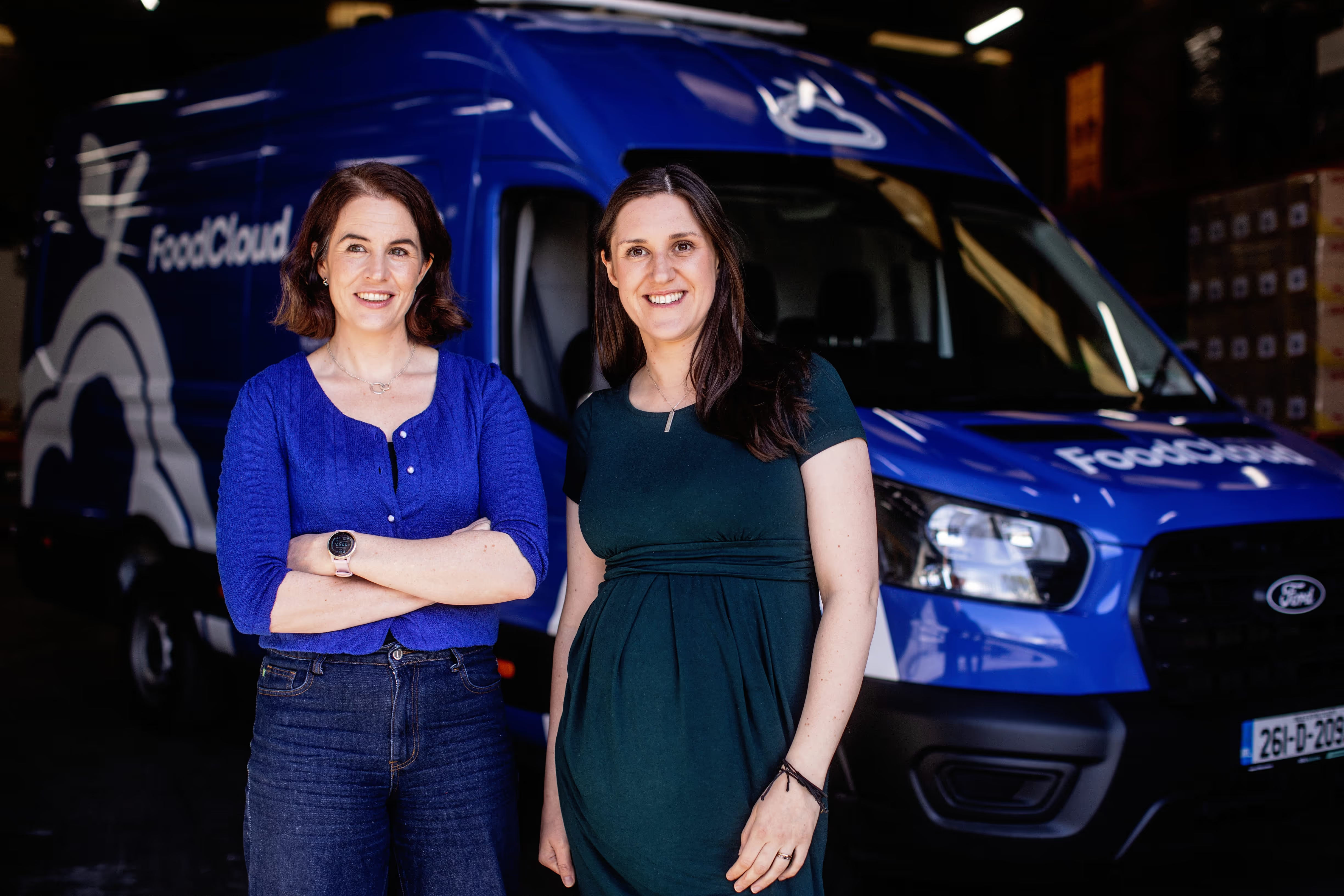
Two smiling women standing in front of a blue FoodCloud delivery van inside a warehouse.
Milestones in our journey.
2012
A Spark That Changed Everything.

It started with a conversation.

At an Enactus event in Trinity College Dublin, a group of students first began exploring a simple but powerful question: how can good food go to waste when people in our communities are going hungry?

That early idea was soon carried forward by Iseult Ward and Aoibheann O’Brien, who turned it into action. By June, this idea becomes reality when surplus food from the Honest 2 Goodness farmers market in Glasnevin is donated to Don Bosco Teenage Care. One thing quickly becomes clear - to scale this solution, technology has to be the engine.
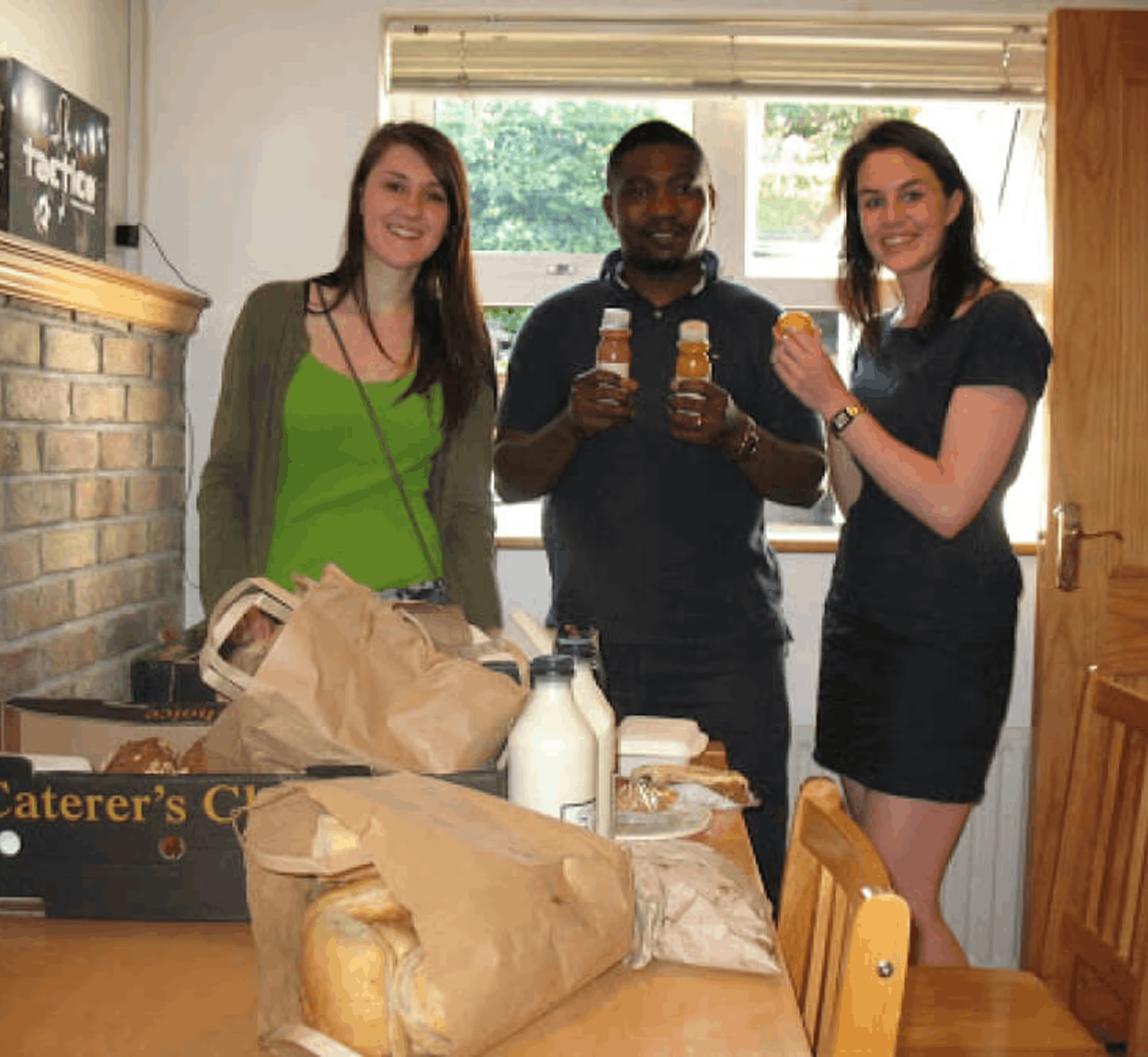
Three people standing behind a table with bread, milk bottles, and other food items, smiling at the camera.
2012
A Spark That Changed Everything.

It started with a conversation.

At an Enactus event in Trinity College Dublin, a group of students first began exploring a simple but powerful question: how can good food go to waste when people in our communities are going hungry?

That early idea was soon carried forward by Iseult Ward and Aoibheann O’Brien, who turned it into action. By June, this idea becomes reality when surplus food from the Honest 2 Goodness farmers market in Glasnevin is donated to Don Bosco Teenage Care. One thing quickly becomes clear - to scale this solution, technology has to be the engine.

Three people standing behind a table with bread, milk bottles, and other food items, smiling at the camera.
2012
A Spark That Changed Everything.

It started with a conversation.

At an Enactus event in Trinity College Dublin, a group of students first began exploring a simple but powerful question: how can good food go to waste when people in our communities are going hungry?

That early idea was soon carried forward by Iseult Ward and Aoibheann O’Brien, who turned it into action. By June, this idea becomes reality when surplus food from the Honest 2 Goodness farmers market in Glasnevin is donated to Don Bosco Teenage Care. One thing quickly becomes clear - to scale this solution, technology has to be the engine.

Three people standing behind a table with bread, milk bottles, and other food items, smiling at the camera.
2012
A Spark That Changed Everything.

It started with a conversation.

At an Enactus event in Trinity College Dublin, a group of students first began exploring a simple but powerful question: how can good food go to waste when people in our communities are going hungry?

That early idea was soon carried forward by Iseult Ward and Aoibheann O’Brien, who turned it into action. By June, this idea becomes reality when surplus food from the Honest 2 Goodness farmers market in Glasnevin is donated to Don Bosco Teenage Care. One thing quickly becomes clear - to scale this solution, technology has to be the engine.

Three people standing behind a table with bread, milk bottles, and other food items, smiling at the camera.
2012
A Spark That Changed Everything.

It started with a conversation.

At an Enactus event in Trinity College Dublin, a group of students first began exploring a simple but powerful question: how can good food go to waste when people in our communities are going hungry?

That early idea was soon carried forward by Iseult Ward and Aoibheann O’Brien, who turned it into action. By June, this idea becomes reality when surplus food from the Honest 2 Goodness farmers market in Glasnevin is donated to Don Bosco Teenage Care. One thing quickly becomes clear - to scale this solution, technology has to be the engine.

Three people standing behind a table with bread, milk bottles, and other food items, smiling at the camera.
2012
A Spark That Changed Everything.

It started with a conversation.

At an Enactus event in Trinity College Dublin, a group of students first began exploring a simple but powerful question: how can good food go to waste when people in our communities are going hungry?

That early idea was soon carried forward by Iseult Ward and Aoibheann O’Brien, who turned it into action. By June, this idea becomes reality when surplus food from the Honest 2 Goodness farmers market in Glasnevin is donated to Don Bosco Teenage Care. One thing quickly becomes clear - to scale this solution, technology has to be the engine.

Three people standing behind a table with bread, milk bottles, and other food items, smiling at the camera.
blue circle
blue circle
A Spark That Changed Everything.

It started with a conversation.

At an Enactus event in Trinity College Dublin, a group of students first began exploring a simple but powerful question: How can good food go to waste when people in our communities are going hungry?

That early idea was soon carried forward by Iseult Ward and Aoibheann O’Brien, who turned it into action. By June, this idea becomes reality when surplus food from the Honest 2 Goodness farmers market in Glasnevin is donated to Don Bosco Teenage Care. One thing quickly becomes clear, to scale this solution, technology has to be the engine.

Three people standing behind a table with bread, milk bottles, and other food items, smiling at the camera.
Building the Engine.

What began as an idea quickly became a mission.

Through Trinity’s Launchbox programme and early backing from organisations like the National Digital Research Centre and the Arthur Guinness Fund, FoodCloud took its first real steps.

Then came a breakthrough. A partnership with Tesco Ireland connected stores directly with charities through technology for the first time.

Six charities joined.
The model worked.
And a new kind of food system began to emerge.

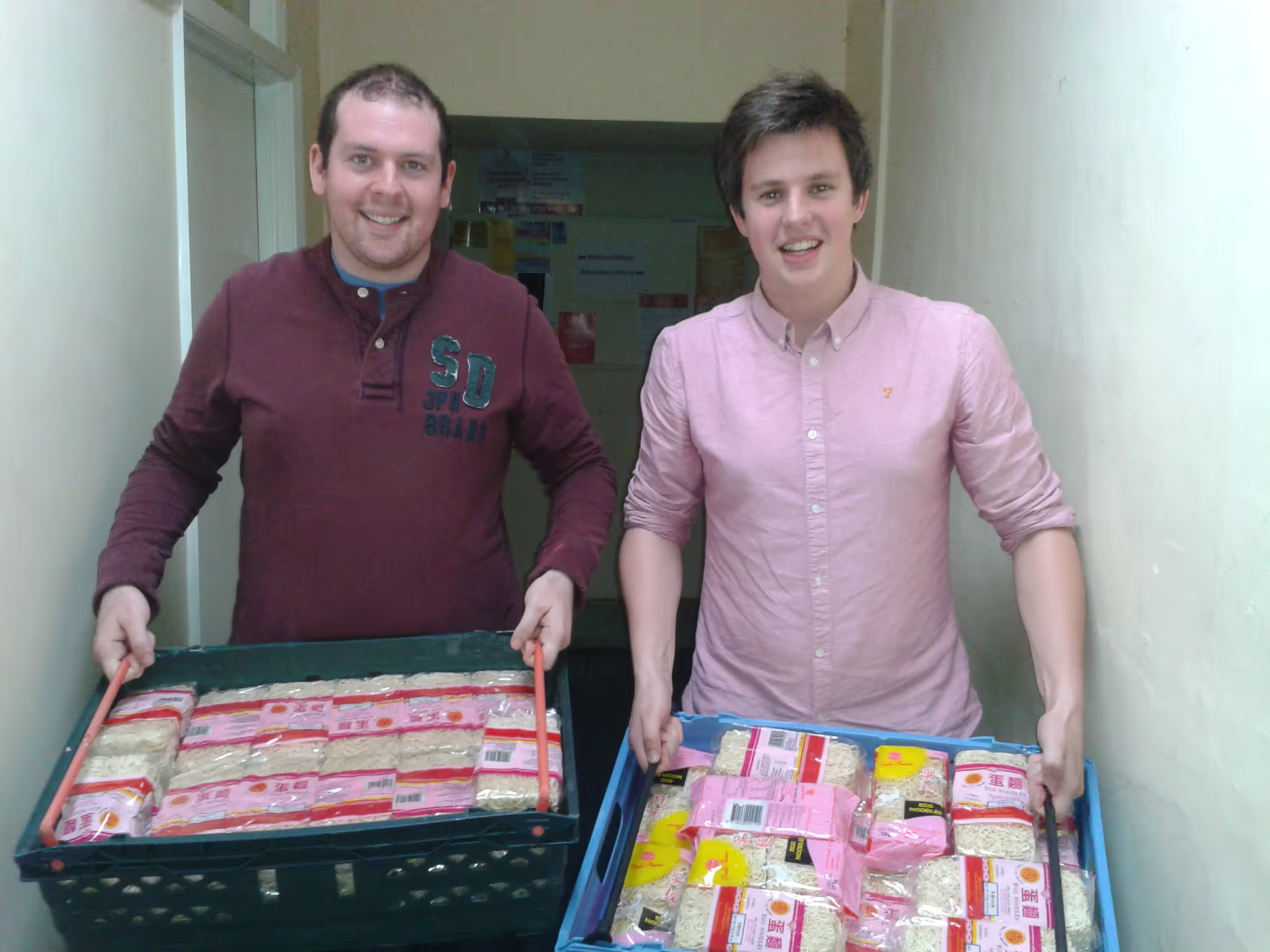
Two men smiling and holding crates filled with packaged instant noodles inside a hallway.
From Idea to National Movement.

What started in a handful of stores spread across the country.

What started in a handful of stores spread across the country. The Tesco partnership scaled to 146 stores nationwide, creating Ireland’s first tech-powered food redistribution network.

FoodCloud also took to the streets (literally) with volunteers rescuing food using an electric vehicle donated by ESB.

Momentum was building:

  • Recognition from Social Entrepreneurs Ireland.
  • A new partnership with Aldi Ireland.
  • The first regional Hub opens in Cork.

A local idea was becoming a national movement.

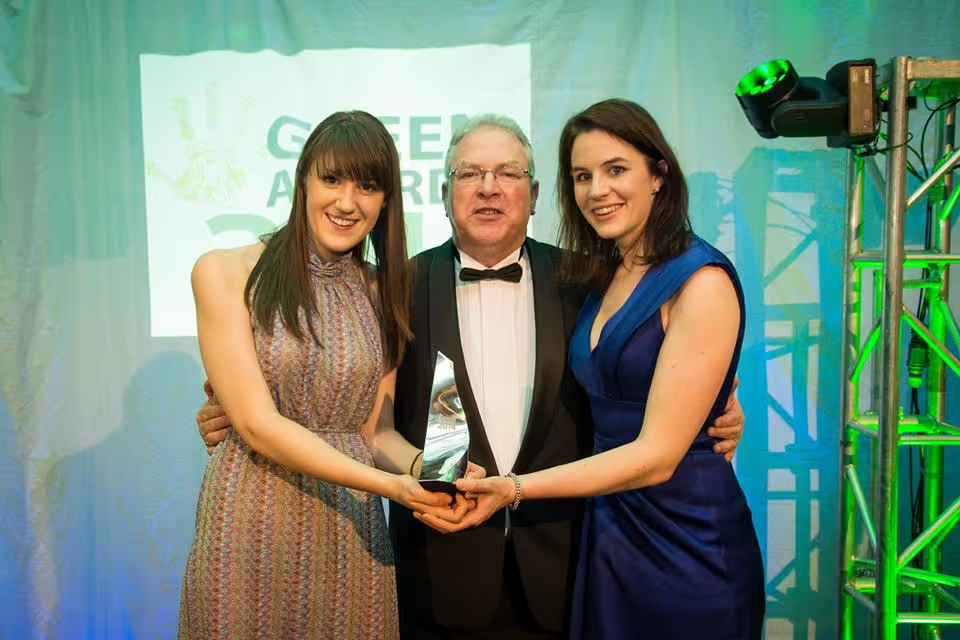
Three people dressed formally holding a triangular glass award at an event with a 'Green Awards' sign in the background.
Crossing Borders, Growing Impact.

FoodCloud’s model didn’t just work in Ireland, it travelled.

In partnership with FareShare UK, the solution launched in Britain, piloted in Tesco stores. 

Tesco CEO Dave Lewis calls the initiative “potentially the biggest single step we’ve taken to cut food waste.” Back home, FoodCloud opens its Dublin Hub and redistributes 567 tonnes of food to 325 charities in a single year.

What started as a student idea was now feeding communities at scale.

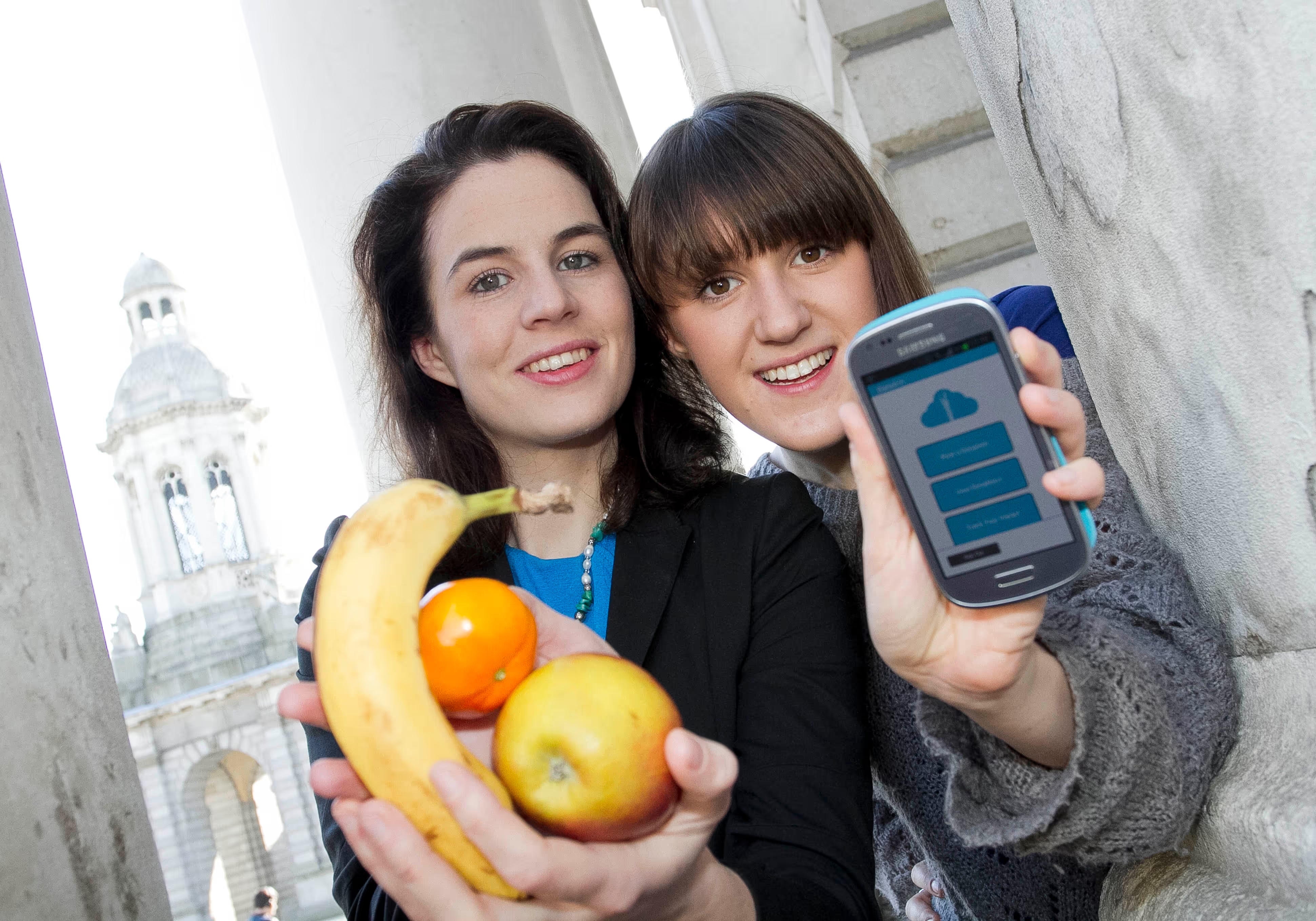
Two smiling women showing a smartphone screen and holding a banana, an apple, and an orange near stone columns with a dome building in the background.
Building the Infrastructure for Scale.

To go further, FoodCloud needed stronger foundations.

A merger with the Bia Food Initiative led to the creation of FoodCloud Hubs, building the physical infrastructure to match its technology.

Growth accelerated:

  • New Hub in Galway.
  • National expansion with Aldi.
  • Partnerships with suppliers like BWG Foods.

By year end:

  • 2,528 tonnes of food redistributed.
  • 1,100 charities supported across Ireland and the UK.

The system was no longer experimental, it has become essential.

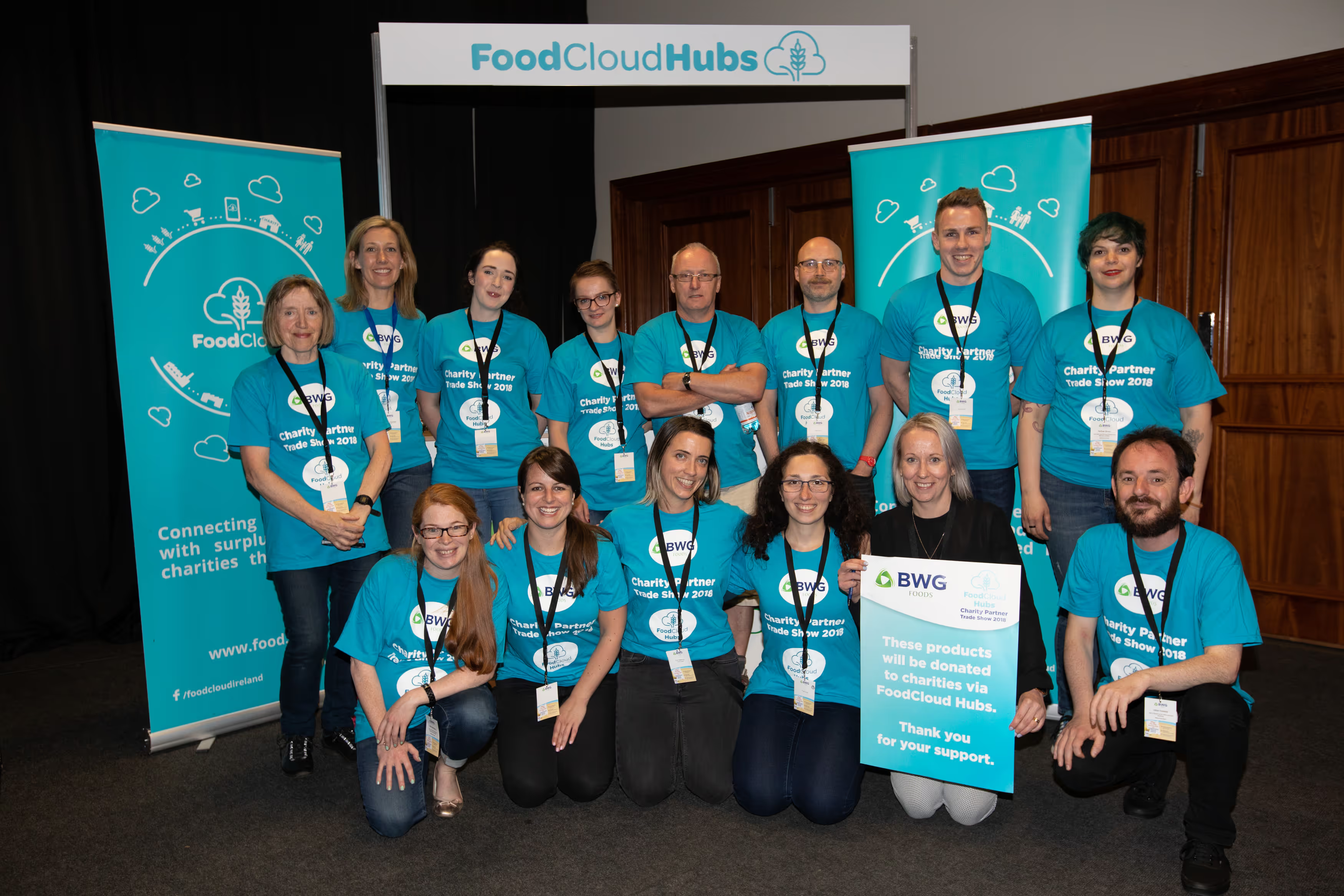
Group of 14 people wearing matching turquoise FoodCloud Hubs Charity Partner Trade Show 2018 t-shirts posing in front of FoodCloud Hubs signage and banners.
Momentum Across the Retail Sector.

More retailers joined. More food was saved. More communities were reached.

With Lidl Ireland coming on board, FoodCloud’s network deepened; strengthening the connections between supermarkets, volunteers and charities.

An ecosystem was forming one designed to stop good food from ever becoming waste.

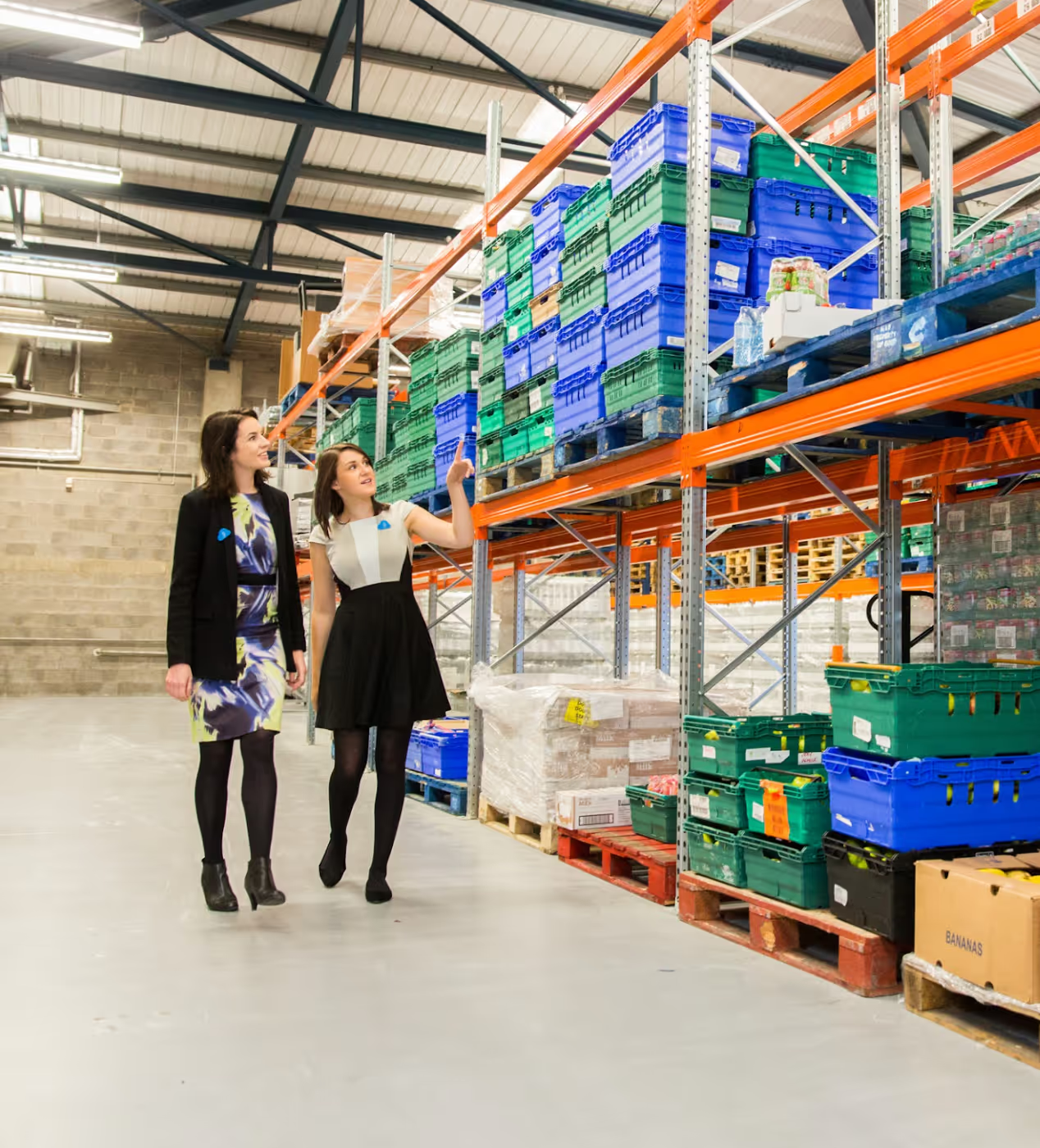
Two women walking and discussing in a warehouse aisle with shelves stacked with green and blue plastic crates and pallets.
Corporate Partnerships Accelerate Community Impact.

The model began attracting global attention.

Major partners joined, including:

  • Waitrose in the UK
  • Musgrave Group
  • Nestlé Ireland

A multi-year partnership with AIB and Rethink Ireland begins and expands the reach and a ambition of FoodCloud.

That year alone:

  • 500,000 meals were redistributed.
Three volunteers wearing blue FoodCloud shirts standing with their backs to the camera in front of a wall with food-related icons.
One System, One Mission.

FoodCloud became more than a set of programmes.

Its technology platform and Hub network were fully integrated into a single, end-to-end solution, connecting surplus food from retailers and manufacturers directly to charities.

One system.
One mission.
Maximum impact.

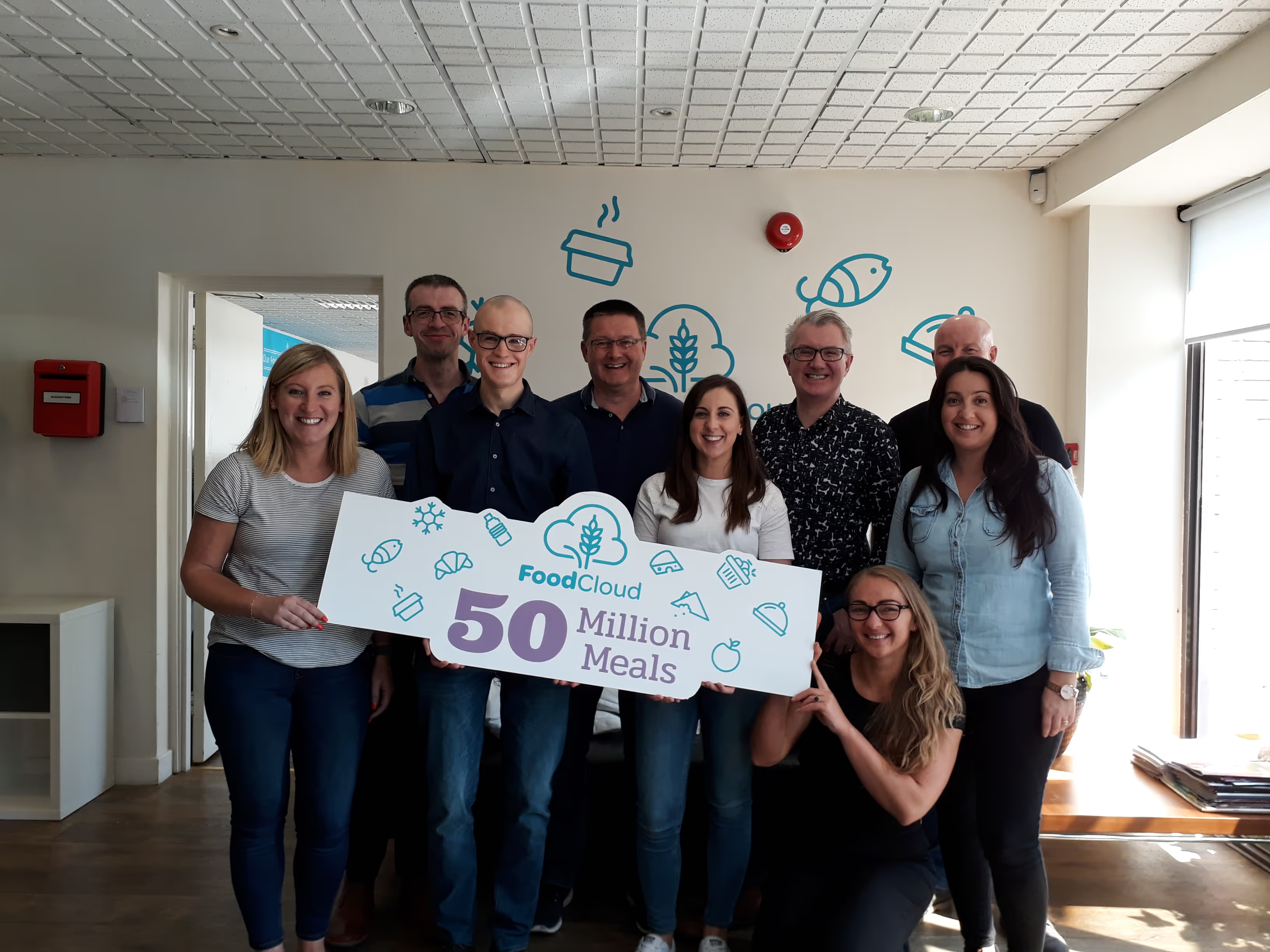
Group of nine people smiling indoors holding a sign reading 'FoodCloud 50 Million Meals' with food icons on it.
Rising to the Challenge of Covid.

When the pandemic hit, the food system came under immense pressure. Supply chains were disrupted. Demand surged. Volunteer numbers dropped. FoodCloud responded at pace.

During peak months:

  • Redistribution jumped from 25 tonnes to over 60 tonnes per week.
  • 75% more food redistributed than in 2019.
  • 650 charities supported across Ireland.

At a time of crisis, FoodCloud became a lifeline.

Four people wearing yellow safety vests and face masks standing apart in a warehouse aisle with shelves stocked with goods.
From Start-Up to Global Network.

Demand continued to grow.

FoodCloud expanded internationally and strengthened its systems for the future.

The Growers’ Project launched, rescuing surplus food directly from farms.

The impact was extraordinary:

  • 16,380 tonnes of food redistributed.
  • 39 million meals shared.
  • Operations across Ireland, the UK, Czech Republic and Slovakia.
  • 52,416 tonnes of CO₂ emissions avoided.

FoodCloud had become a global force tackling food waste and food insecurity together.

Warehouse worker wearing a reflective vest and face mask holds a crate filled with various food items inside a storage facility.
A Model for the World.

With a clear strategy for growth, FoodCloud began exporting its model beyond Europe.

A landmark moment came in 2023 with a pilot in Kenya, alongside The Global FoodBanking Network. Using its technology platform, FoodCloud introduced a new approach:

A “virtual food bank” connecting national foodbanks, donors and communities directly.

At the same time:

  • FoodCloud celebrated 10 years of impact.
  • Introduced a carbon calculator to measure environmental change at scale.
Two women wearing black hats and gray aprons preparing food in a commercial kitchen, one pouring from a large metal bowl and the other lining a baking pan with parchment paper.
Scaling Community Impact, Changing Systems.

Today, FoodCloud is entering its most ambitious phase yet.

The One Billion Meals Campaign sets a bold global target. New initiatives like the AIB FoodCloud Community Meals programme are expanding access; turning surplus food into ready-to-eat meals for those who need them most.

At the same time, research through the Food Circle initiative is helping shape policy and long-term systems change.

FoodCloud is now working at every level:

  • Local communities.
  • National networks.
  • Global systems.

Driven by technology. Powered by partnerships. Focused on impact.

Two women standing behind boxes of watermelons in a warehouse, one holding a smartphone displaying an app.
blue circleblue circle
From one conversation in 2012 to millions of meals shared in communities worldwide - this is just the beginning.